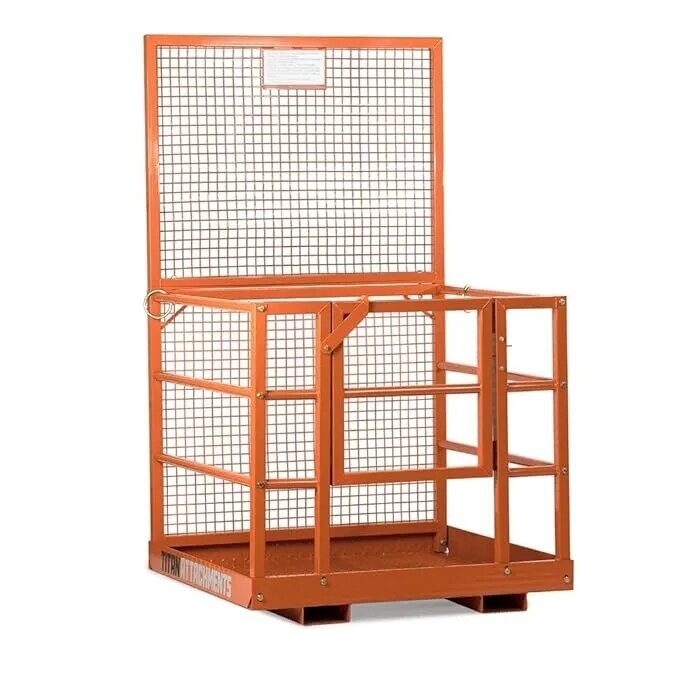
A cage mounted on forklift forks can contain scattered cartons, bags and components, but a mesh enclosure does not automatically make it safe for lifting people. By the end, you will know which warehouse tasks suit a cage, how to verify equipment and forklift capacity, and what controls belong in every material or personnel-lifting procedure.
Key takeaways
- Use a cage for loose, mixed or irregular loads that could slide from bare forks.
- Never lift people in a cage unless the forklift and platform are approved for personnel work.
- Match cage capacity, fork pockets, locking points and load centre to the forklift.
- Inspect the cage floor, gate, welds, pins and load before every movement.
Which warehouse jobs suit a cage fork attachment?
A cage fork attachment suits daily work involving loose, mixed or irregular materials that could slide from bare forks. Common cage fork attachment uses include collecting cartons, bags, drums, cylinders and components; order picking; stock counting; elevated inspections; lamp replacement; and light maintenance where floor-level access is unsafe.
| Use | What it handles | What it does not authorise |
|---|---|---|
| Material cage | Contains goods during lifting, movement or positioning | Carrying or elevating people |
| Personnel platform | Provides a purpose-designed, guarded standing area for workers | Substituting an ordinary material cage, pallet or fork bin |
Treat it as a material cage when only goods enter it. Check the cage’s marked safe working load, then compare it with the forklift’s revised capacity after accounting for the attachment’s weight and forward load centre.
A cage that holds several small items in one trip can save handling time, but its sides can block the operator’s view; reverse travel or a spotter may be necessary.
If a person must enter the cage, stop treating it as a material container. Use a platform specifically designed and assessed for personnel lifting, with controls such as:
- Positive fork retention, a secured gate, guardrails and toe boards
- Fall protection where the risk assessment requires it
- A competent operator at the controls, clear communication and an exclusion zone below
- Written site permission and a task-specific risk assessment
Never use the cage as a casual passenger lift, and never allow anyone beneath an elevated load.
How does a cage improve load control, and what trade-offs should you expect?
A cage improves load control and makes movement safer when loose, awkward, or mixed items could slide, fall, or spill from bare forks. It is more efficient when one contained trip replaces repeated handling of cartons, bags, drums, cylinders, or components.
The case for a cage fork attachment for warehouse work is strongest when goods lack a stable pallet base.
| Option | Load control | Best choice | Trade-off |
|---|---|---|---|
| Bare forks | Supports only loads that span both forks | Long, rigid, stable items | Loose items can fall or shift |
| Pallet | Provides a stable, transferable base | Palletised goods and regular routes | A damaged pallet can collapse or snag |
| Cage attachment | Retains scattered or irregular items behind walls | Mixed, non-palletised picking and collection | Adds tare weight and can block the view |
| Purpose-built bin | Gives rigid protection and repeatable handling | Frequent movement of one known material | Costs more flexibility for changing loads |
A cage is not automatically faster. You must load and unload it separately, account for its weight in the combined capacity, and travel slowly if the enclosure raises the load centre. The cage can obstruct the operator’s view, forcing reverse travel or a spotter; that benefit disappears if every trip needs extra coordination.
Choose the cage when containment and fewer manual touches outweigh those delays. Choose a pallet or bin when the load already has a compatible, stable base. A material cage is not a personnel platform, and its enclosure does not authorise lifting workers.
What safety controls apply when people enter a forklift cage?
A forklift cage attachment must be purpose-designed and approved for people, not merely enclosed with mesh. A material cage, pallet or fork-mounted bin is not a personnel platform; using one to lift workers creates an uncontrolled fall and movement hazard.
1. Confirm the platform has a permanent capacity plate, positive fork retention, a backrest or overhead guard, closed sides, a self-latching gate and toe boards that prevent tools and feet from sliding out.
2. Check that the forklift manufacturer or a professional engineer has approved the attachment. Record the attachment-adjusted truck capacity on the forklift’s markings; use the lowest limit among the platform rating, revised forklift capacity and site lifting plan.
3. Complete a task-specific risk assessment and written permit before each unusual access job. Name the competent operator, platform occupants, supervisor, communication method, rescue plan and exclusion zone.
4. Train the operator and occupants. Keep people out from beneath the raised platform or any elevated load, prohibit casual passenger rides, and do not move the truck while anyone is elevated unless the approved procedure expressly permits it.
5. Use the required fall protection: guardrails first, then a harness connected only to a rated anchor when the risk assessment requires personal restraint or arrest. Inspect the gate, floor, rails and anchor before entry.
6. Establish level ground, clear overhead hazards and a barricaded area below. Stop for lost communication, a fault, unstable footing or a person entering the zone. A site supervisor must authorise the lift under applicable Indian workplace safety rules.
How do you verify cage fit, capacity and forklift compatibility in Pune?
Start with the forklift data plate, not the cage catalogue. The usable load is the lowest of the cage’s safe working load, the truck’s revised capacity at the attachment’s actual load centre, and any site lifting-plan limit. A cage that fits the forks can still overload the front axle.
Check these items before placing an order:
- Fork cross-section, usable fork length, fork spread, heel clearance and pocket dimensions
- Positive locking method, pocket depth and any retaining pins or chains
- Cage self-weight, safe working load, combined weight and marked load centre
- Available overhead clearance, mast height and the cage’s overall width
- Attachment data plate, dimensional drawing, operating instructions and inspection or test certificate
- Forklift manufacturer’s written compatibility confirmation and the revised capacity chart
- A separate platform approval, risk assessment and fall-protection plan if people will be elevated
| Cage type | Intended load | Approval evidence to seek |
|---|---|---|
| Material cage | Cartons, bags, drums or components | Cage SWL, attachment data plate and truck capacity confirmation |
| Personnel platform | Workers carrying out exceptional access work | Purpose-designed platform approval, risk assessment and controls for falls and unintended movement |
| Improvised pallet or bin | No approved personnel use | Reject for lifting people |
Ask a Pune supplier to measure your actual forks, verify the locking engagement and calculate capacity at the attachment’s load centre. VIMALNX EQUIPMENTS PVT LTD can help assess those dimensions and match the attachment to the truck before you rely on the cage fork attachment benefits in Pune.
Record the result for your material handling cage attachment in Pune.
Related product
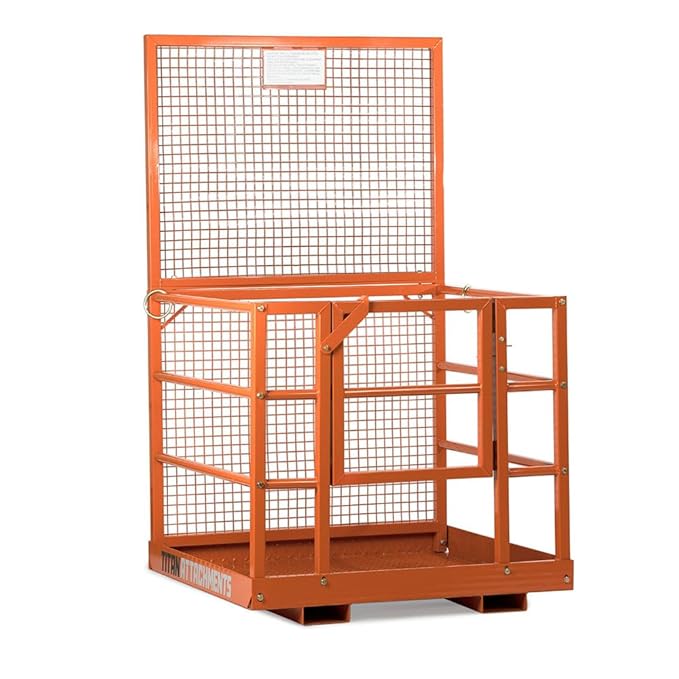 | Lifting Equipment ₹65000 The Cage Fork Attachment is a versatile material handling accessory designed to convert standard forklift forks into a secure working platform. View product → |
What should operators inspect and do before moving a loaded cage?
A loaded cage is ready to move only after you confirm its attachment, load and route. The lower limit among the cage’s safe working load, the forklift’s attachment-adjusted capacity and the site lifting limit controls the load.
1. Read the cage rating plate and forklift capacity chart. Check the combined cage weight, load-centre distance and overhead clearance; a cage that fits the forks can still exceed the truck’s reduced capacity.
2. Inspect both fork pockets, heel clearance and the locking device. Reject the attachment for cracks, bent sections, damaged welds, loose pockets or a lock that does not positively retain the forks.
3. Check the mesh or solid walls, gate, hinges and floor. Remove items that can fall through openings, and keep the stack below the wall or restraint height.
4. Centre the load between the forks and distribute its weight evenly. Secure cartons, bags, drums, cylinders or irregular items when movement could shift them; never rely on the cage wall to contain an overloaded stack.
5. Check visibility before travelling. Use reverse travel when the cage blocks the forward view, or appoint a trained spotter who can see the route and communicate with the operator.
6. Close off the travel path and the area below the load. Keep people clear of the cage, forks and any possible drop zone, then travel with the load low, upright and at a controlled speed.
Stop immediately if the cage shifts, the load moves, the route becomes obstructed or communication is lost. Lower the load before investigating.
Frequently asked questions
Which warehouse jobs suit a cage fork attachment?
Use it for loose or irregular materials, carton collection, order picking, stock counting, elevated inspections, lamp replacement and light maintenance where floor-level access is unsafe.
How does a cage improve load control, and what trade-offs should you expect?
The cage contains items that could slide or roll from bare forks, but it adds weight, changes the load centre and reduces the forklift’s remaining lifting capacity. Check the combined cage-and-load rating before lifting.
What safety controls apply when people enter a forklift cage?
Treat entry as personnel lifting, not ordinary material handling. Use a platform designed and approved for people, secure it to the forklift, provide a guarded gate and toe protection, keep occupants inside the platform, and prohibit travel with people elevated unless the approved procedure allows it.
How do you verify cage fit, capacity and forklift compatibility in Pune?
Confirm the cage’s rated capacity, self-weight, fork-pocket dimensions, locking method and load-centre marking. Compare the combined load with the forklift data plate and load chart, then obtain written confirmation from the attachment or forklift manufacturer when details do not match.
What should operators inspect and do before moving a loaded cage?
Inspect welds, mesh, floor, gate, hinges, pins, fork pockets, locking devices and visible damage. Centre and secure the load, keep it below the guard height, lift only a short distance for a stability check, travel slowly with the load low, and keep people clear.
Keywords